Wedding flowers for Anerley Road venues
Posted on 16/10/2026
Wedding flowers for Anerley Road venues: a practical guide to beautiful, venue-ready floral styling
Planning Wedding flowers for Anerley Road venues is one of those wedding tasks that looks simple at first, then suddenly becomes very specific. The bouquet has to suit the couple, of course, but the flowers also need to work with the room, the light, the aisle, the tables, the timings, and sometimes a surprisingly awkward entrance door. If you are marrying near Anerley Road, that local detail matters more than people expect. A smart floral plan can make a modest space feel polished, and a grand room feel warm rather than overdone.
This guide walks through how to choose, style, order, and plan wedding flowers for a venue on or near Anerley Road in a way that feels calm, elegant, and realistic. You will get practical advice on flower choices, delivery timing, venue logistics, common mistakes, and the little decisions that quietly make the day look far more cohesive. Truth be told, the best wedding flowers are usually the ones that look effortless because someone did the careful thinking behind the scenes.
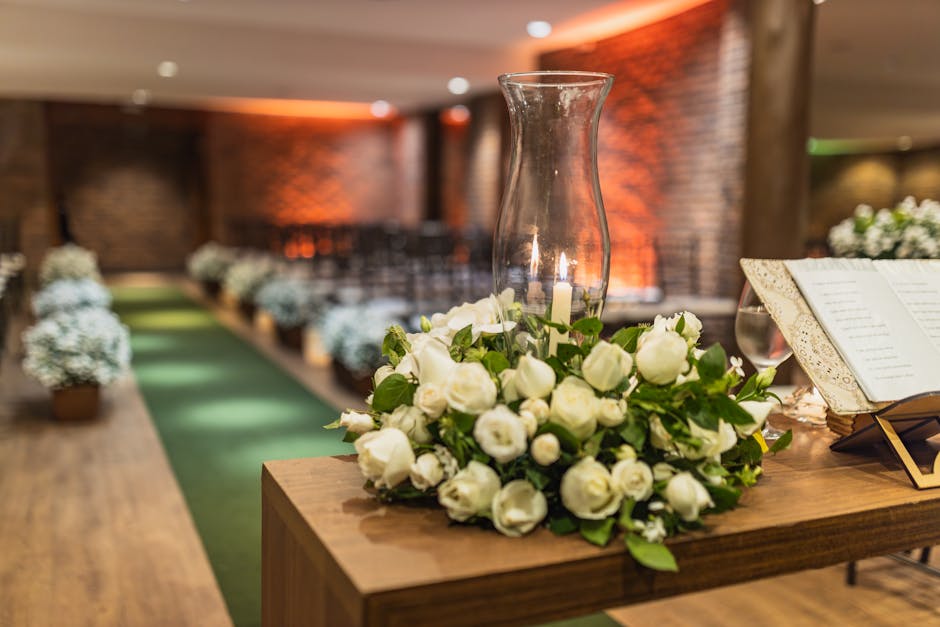
Table of Contents
- Why wedding flowers for Anerley Road venues matter
- How the process works
- Key benefits and practical advantages
- Who this is for and when it makes sense
- Step-by-step guidance
- Expert tips for better results
- Common mistakes to avoid
- Tools, resources and recommendations
- Law, compliance, standards, or best practice
- Options, methods, or comparison table
- Case study or real-world example
- Practical checklist
- Conclusion
- Frequently asked questions
Why Wedding flowers for Anerley Road venues Matters
Flowers do more than decorate a wedding. They frame photographs, soften hard edges, set the tone at the door, and help a room feel intentional rather than merely filled. That is especially true for Anerley Road venues, where you may be working with a mix of intimate spaces, local churches, reception rooms, hotel function areas, or private hire settings nearby. Each one has its own light, scale, and visual rhythm.
When flowers are chosen with the venue in mind, everything looks more settled. A narrow aisle needs different stems from a wide staircase. A low-ceilinged room needs arrangements that do not crowd the eye. A modern venue may welcome clean lines and restrained colour, while a traditional room often suits fuller, softer designs. The point is not to buy more flowers. The point is to buy the right flowers.
There is also the practical side. Florals have to survive transport, unpacking, setup, and the long wedding-day wait between morning prep and the final dance. If the plan ignores those realities, you end up with drooping bouquets and stressed people carrying boxes around at 9 a.m. Not ideal, to be fair.
A local florist familiar with florist services in Anerley SE20 can help interpret the venue and guide you toward choices that stay fresh, look elegant, and fit the setting. That local knowledge tends to matter more than a glossy inspiration board, even if Pinterest would like to think otherwise.
How Wedding flowers for Anerley Road venues Works
The process usually begins with the venue, not the bouquet. You look at the room, the ceremony layout, the guest numbers, the colour of the walls, the table shapes, and the amount of natural light. Then you decide where flowers will do the most visual work. At a practical level, that often means three layers: personal flowers, ceremony flowers, and reception flowers.
1. Personal flowers
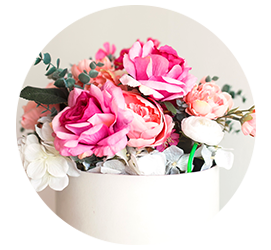
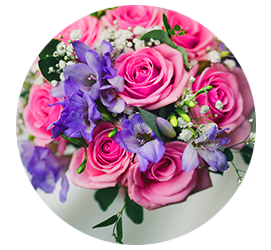
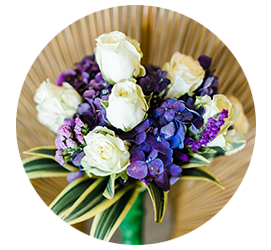
This includes bridal bouquets, bridesmaid bouquets, buttonholes, corsages, and sometimes hair flowers. These pieces are the most photographed and the most personal. They need to feel right in the hand, not just in the picture. A bouquet that is too large can feel tiring by the time you reach the aisle. One that is too small can disappear next to structured dress fabric.
2. Ceremony flowers
This is the visual welcome. Think aisle ends, pedestal arrangements, altar or mantel pieces, registrar table flowers, or a couple of statement arrangements at the front of the room. These designs work best when they guide the eye toward the couple without blocking movement or creating clutter.
3. Reception flowers
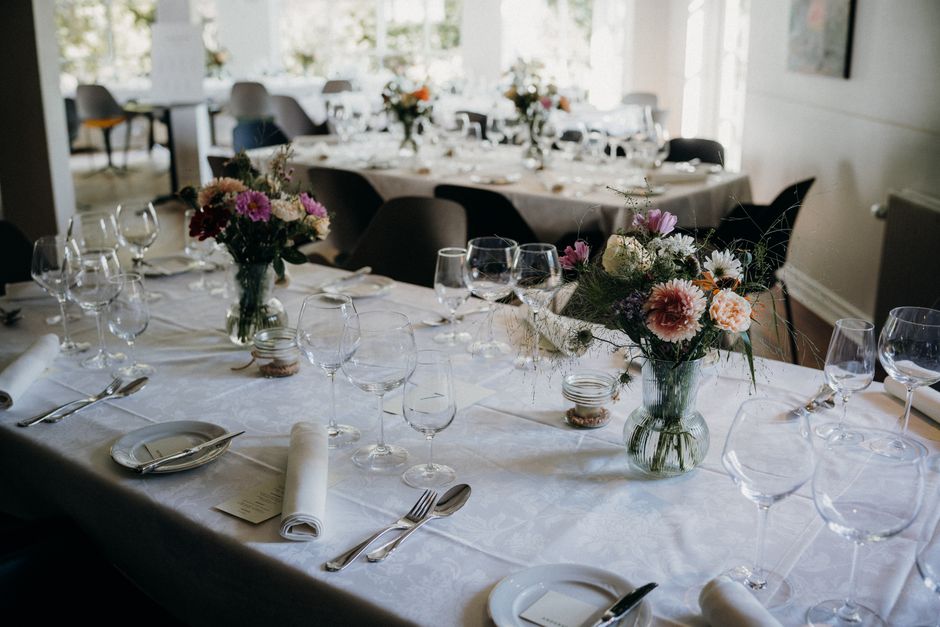
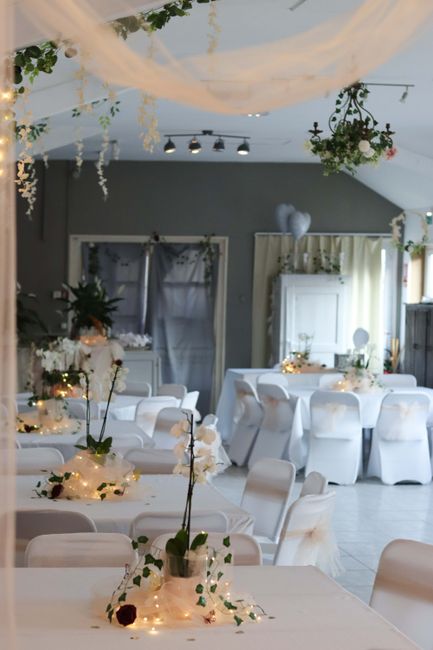
Reception flowers usually cover top tables, centrepieces, welcome areas, cake tables, or a few feature arrangements that can be repurposed later. For many couples, this is where the room really comes together. A handful of well-placed designs often does more than a lot of small, scattered extras.
Wedding flowers are also timed. A florist may prepare some stems the day before, condition them overnight, then transport and install them on the wedding morning or just before guests arrive. If your venue has a tight access window, or if multiple suppliers are setting up at once, timing becomes a real puzzle. A simple puzzle, but still a puzzle.
For couples who want a cohesive bridal look, it can help to browse matching items such as wedding bridal bouquets, wedding bridesmaid bouquets, and wedding buttonholes. That makes it easier to keep the palette and flower types consistent across the whole day.
Key Benefits and Practical Advantages
Good wedding flowers bring both emotional and practical value. The emotional part is obvious. Flowers help the day feel celebratory, personal, and memorable. The practical part is a little less obvious, but often more important.
- They create instant cohesion. A few repeated flowers or colours can pull together outfits, tableware, and venue decor.
- They improve photos. Softening harsh corners or lifting a plain table background makes a visible difference.
- They help with scale. In smaller venues, well-designed flowers add depth without crowding the room.
- They can be adapted to budget. You do not need the same flower count for every space. Smart placement matters more.
- They support the mood of the day. White and green feels calm and formal; mixed colours feel cheerful; richer tones feel warm and romantic.
Another advantage is flexibility. If your wedding breakfast table is compact, a florist can create low arrangements that do not block conversation. If the ceremony room is plain, a single statement piece can lift the whole scene. This is where experience really pays off. You start noticing how one arrangement in the right place can do the work of three smaller ones.
Local delivery matters too. Wedding flowers ordered from an Anerley-based florist can often be coordinated with local setup times more smoothly than flowers travelling from across London. When the schedule is tight, that kind of reliability is a comfort. A big one.
Who This Is For and When It Makes Sense
This topic matters if you are any of the following:
- Planning a wedding at a venue near Anerley Road and want flowers that suit the space.
- Trying to balance style, budget, and practical delivery timing.
- Working with a church, civil ceremony room, hotel, hall, or private dining venue.
- Wanting a florist who understands local logistics rather than treating the wedding as an abstract mood board.
- Looking for coordinated items for the couple, attendants, and tables.
It also makes sense if you are the one doing the planning on behalf of the couple. Sometimes that is a maid of honour, a parent, or the person who has become, almost accidentally, the project manager of the wedding. The unsung hero role. No cape, just spreadsheets.
For couples who want one trusted place to start, the dedicated wedding flowers in Anerley SE20 page is a sensible first stop because it brings the wedding-specific options together in one place. If you are still comparing broad styles, you might also browse wedding flower collections to see how different arrangements can work across bouquets, buttonholes, and venue pieces.
Step-by-Step Guidance
Step 1: Start with the venue layout
Ask for photos or, better still, visit the venue if you can. Notice where people stand, where the light falls at different times of day, and where flowers would actually be seen. A grand entrance is a natural feature point. A dark corner, not so much. Don't overpay to decorate a space nobody looks at.
Step 2: Choose the overall floral mood
Decide whether you want classic, romantic, modern, natural, or colourful styling. This does not have to be a strict theme. It is more a feeling. Some couples love crisp white roses and lilies. Others want a looser garden look with mixed stems. Both can be beautiful. What matters is consistency.
Step 3: Select a workable colour palette
Think about the dress, suits, table linen, venue walls, and the season. Pale flowers can look stunning in daylight but may disappear against a pale backdrop. Bold tones can bring life to a neutral room. If you are unsure, white, cream, blush, and green are usually safe starting points, then add one accent colour if needed.
Step 4: Prioritise the flowers that will be seen most
If the budget is limited, spend first on the bouquet, the ceremony focal point, and the main table flowers. Then add buttonholes and smaller extras if there is room. That is often the best use of money. A smaller number of strong pieces is better than lots of weak ones.
Step 5: Confirm delivery and setup logistics early
Check access times, parking, lift availability, and whether the venue has rules about flame, water, or floor protection. Make sure someone knows where the flowers should go. A florist should not arrive to find three locked doors and a confused usher. It happens more than you'd think.
Step 6: Plan what gets reused
Ceremony flowers can often be moved to the reception. Buttonholes stay on the wedding party. Bouquets are naturally personal keepsakes. If your florist can design with repurposing in mind, you get more value from the same flowers.
Step 7: Add final details
This is where the day becomes polished. Ribbon colour on the bouquet handle, matching flower choices for buttonholes, subtle additions to the cake table, or coordinated bridesmaid bouquets all help the styling feel intentional rather than assembled in a rush.
Expert Tips for Better Results
The best advice is often the simplest: design for the room you actually have. Not the room you wish you had.
Here are the choices that make the biggest difference in practice:
- Keep the bouquet size in proportion. A dramatic dress may carry a fuller bouquet, while a slim silhouette often looks better with something lighter and more elegant.
- Use repeats. Repeating two or three flowers across the day creates coherence. One repeat is enough.
- Mind the scent. Strongly scented flowers can be lovely, but in a small indoor venue they can overpower the room.
- Build around availability. If a flower is out of season, expect substitutions. That is normal. A good florist will keep the look, not just the flower name.
- Think about hand feel. A bouquet should be comfortable to hold for a while, not just for a five-minute photo shoot.
- Use low centrepieces where guests need to talk. Tall flowers are only worth it if the room can handle them.
One thing couples sometimes forget: flowers photograph differently from how they look in the shop. A deep burgundy arrangement may read almost black in dim light; a soft peach bouquet can appear much paler under bright indoor lighting. So ask how the arrangements will look in the venue conditions, not just in daylight on a workbench.
If you want a classic, dependable look, white roses remain a strong choice, especially in formal venues. For something with a bit more texture, arrangements built around lisianthus, alstroemeria, hydrangea, or mixed rose designs can feel lush without becoming heavy. And yes, hydrangeas are lovely, but they do need careful conditioning. They can be a little dramatic. Like some grooms, honestly.
Common Mistakes to Avoid
Wedding flowers are one of those things where small oversights become very visible on the day. Here are the mistakes that tend to cause the most regret:
- Ordering without checking the venue rules. Some venues have restrictions on candles, water, confetti, or where floral stands can be placed.
- Choosing designs that are too big for the space. Big does not automatically mean better. In a compact venue, it can just feel crowded.
- Forgetting the timings. Flowers need to arrive when the room is ready, not when the flowers are ready.
- Trying to match too many colours. A palette with too many shades can look muddled in photos.
- Leaving buttonholes to the last minute. They are small, but they matter. They are seen all day.
- Assuming every stem will be available exactly as pictured. Seasonal supply shifts happen. Flexibility helps.
- Ignoring storage. If flowers are delivered early, they need the right cool, safe spot before setup.
There is also a hidden mistake people make all the time: choosing separate suppliers or separate products without checking whether the overall look will hang together. A bouquet, corsage, and table arrangement can all be beautiful individually and still feel disconnected. That is where a coordinated wedding collection can save a lot of faff.
Tools, Resources and Recommendations
You do not need fancy software to plan wedding flowers well, but a few simple tools help enormously:
- Venue photos from different angles, especially the ceremony area and the dining setup.
- A guest-table sketch so you know where centrepieces will go.
- Outfit swatches or photos to check colour harmony.
- A short priority list separating must-have flowers from nice-to-have extras.
- A delivery and setup checklist with times, access notes, and contact numbers.
For product browsing, it helps to compare a few wedding-focused ranges rather than guessing from random search results. Collections such as true happiness wedding collection, pure romance wedding collection, and white wonders wedding collection give you a sense of how a florist balances bouquets, attendants' flowers, and ceremony styling within one look.
If you are comparing formal table designs, the following can be useful starting points: wedding table arrangements, which can help you judge whether low, medium, or fuller centrepieces suit your reception space best. For couples who want a softer, more classic finish, white-forward designs often read beautifully in photographs and feel timeless without being dull.
Law, Compliance, Standards, or Best Practice
For wedding flowers, this topic is less about legal compliance in the strict sense and more about sensible event best practice. That said, a few UK norms are worth keeping in mind.
First, venue rules matter. Civil and private venues often have their own policies on setting up, moving furniture, using water containers, or placing items in certain areas. Churches and licensed ceremony spaces may have additional expectations about timing, access, and what can be attached to fixtures. Always confirm these details before finalising the design. It saves stress later. Quite a lot of stress, actually.
Second, if flowers are being transported, handled, or installed by a florist, they should be conditioned and secured properly so they stay fresh and stable. Best practice here means cool storage, sensible packaging, and careful handling around delicate petals and ribbon work.
Third, if you are choosing scented blooms or allergy-sensitive flowers, think about guest comfort. Strong scent can be lovely for some people and overwhelming for others. In a small indoor room, subtlety usually wins.
Finally, if you are using candles, water-filled vases, or decorative mechanics, ask the florist and venue how those items should be positioned and protected. Practical safety is not glamorous, but it matters more than the ribbon colour. Every time.
Options, Methods, or Comparison Table
Different venues and budgets suit different floral methods. Here is a simple way to compare the most common approaches for Anerley Road wedding settings.
| Approach | Best for | Strengths | Things to watch |
|---|---|---|---|
| Minimal bouquet-led styling | Smaller ceremonies or tighter budgets | Clean, elegant, cost-aware, easy to transport | May feel sparse if the venue is large |
| Balanced ceremony and reception flowers | Most weddings | Good visual impact, flexible, easy to coordinate | Needs clear planning so the budget does not drift |
| Full venue styling | Large receptions or highly decorative weddings | Strong visual consistency and photo impact | More expensive and logistically complex |
| Repurposed floral design | Couples wanting value from one set of flowers | Efficient use of arrangements from ceremony to reception | Requires precise timing and venue cooperation |
If you are unsure which route fits your day, the balanced option is usually the safest. It gives enough presence to feel special without turning the schedule into an episode of moving furniture and guessing which vase belongs where.
Case Study or Real-World Example
Consider a couple planning a late-afternoon ceremony near Anerley Road, followed by a reception in a modest-sized room with natural daylight on one side and softer lighting elsewhere. They want a romantic look, but not a heavy one. They also want to keep the room open for guests to talk comfortably.
In that kind of setting, a sensible floral plan might look like this: a medium-sized bridal bouquet in white and blush, smaller matching bridesmaid bouquets, simple buttonholes, one strong ceremony arrangement at the front, and low table flowers that repeat the same roses and greenery in a quieter form. The ceremony flowers are later moved behind the top table, which gives the room more focus without adding extra designs.
The result is not dramatic in a showy way. It is better than that. The room feels finished. Guests notice the flowers, but they are not distracted by them. The couple gets the photographs they hoped for, and the setup team is not left scrambling between the ceremony and dinner. Everyone wins, which is rare enough in weddings to be worth celebrating.
That sort of plan also leaves room for small personal touches. Maybe the bouquet ribbon matches the bride's shoes. Maybe the buttonholes use a single flower carried through the whole wedding palette. Maybe the table arrangements are simple enough that guests can still see each other without leaning awkwardly left or right. Little things. They add up.
Practical Checklist
Use this checklist before you confirm your wedding flowers:
- Have I checked the venue layout and access times?
- Do I know which flowers are essential and which are optional?
- Have I matched the floral style to the venue size and lighting?
- Is the colour palette coherent with outfits and table styling?
- Have I asked about seasonal substitutions?
- Do I know where the ceremony flowers will go after the service?
- Are buttonholes, corsages, and bouquets coordinated?
- Has delivery timing been agreed clearly?
- Have I confirmed any venue rules about water, stands, or setup?
- Do I have one person responsible for receiving the flowers on the day?
Expert summary: the most successful wedding flowers are not the most expensive ones. They are the ones designed around the venue, the schedule, and the feeling you want the room to have. Keep it simple where you can, be specific where it matters, and leave a bit of flexibility for seasonal flowers and real-world timing. That approach almost always looks better.
If you are ready to compare options, look at the florist's wedding collections, think through your venue layout, and decide which three floral moments matter most. That is usually enough to build a clear, elegant plan without overcomplicating the day.
Get a free quote today and see how much you can save.
Conclusion
Wedding flowers for Anerley Road venues work best when they are chosen with the room, the light, and the flow of the day in mind. The right arrangements do not just fill space; they shape the atmosphere, support the photos, and help the whole celebration feel considered. Whether you prefer understated elegance or fuller floral styling, the key is to make each piece earn its place.
If you are still deciding, start with the venue, then the bouquet, then the table and ceremony pieces. That order keeps the process grounded and prevents last-minute panic. And if you have ever stood in a wedding venue wondering why a beautiful bouquet looked oddly small under bright lights, you will know why this planning matters so much.
Take your time, trust the practical details, and keep the overall feeling in mind. A well-chosen floral plan has a quiet kind of magic about it. It settles into the room and just makes everything feel right.
Frequently Asked Questions
What flowers are best for wedding venues on Anerley Road?
The best flowers depend on the venue style, season, and colour palette, but roses, lisianthus, hydrangea, alstroemeria, and mixed seasonal blooms are popular because they travel well and photograph beautifully.
How far in advance should I book wedding flowers?
It is sensible to book as early as you can, especially for peak wedding dates. Early booking gives you more choice and more time to refine the design around the venue layout.
Can wedding flowers be reused from the ceremony to the reception?
Yes, and it is often a smart way to get more value. Ceremony flowers can frequently be moved to the top table, entrance, or focal points at the reception if the timing and venue allow it.
How do I choose flowers that suit my venue?
Look at the room size, ceiling height, lighting, wall colours, and table layout. Smaller rooms usually benefit from lighter, lower designs, while larger spaces can carry more dramatic arrangements.
Are white wedding flowers a safe option?
White flowers are a classic choice because they feel calm, elegant, and easy to style with most dresses and suits. They are especially useful if you want a timeless look that will not feel dated in photographs.
What if a flower I want is out of season?
A good florist will suggest a seasonal substitute that keeps the same style and tone. In most cases, the overall look can be preserved even if one specific stem changes.
How many flowers do I need for a small venue?
Not many, honestly. A bouquet, a few buttonholes, one or two ceremony focal pieces, and simple table arrangements can be enough if the room is compact and already attractive.
Do wedding flowers need special venue approval?
Sometimes yes. Many venues have their own rules about setup times, water, candles, and where decorations can be placed, so it is wise to confirm those details before the wedding day.
What is the difference between bridal bouquets and bridesmaid bouquets?
Bridal bouquets are usually more detailed, larger, or visually prominent. Bridesmaid bouquets are often smaller and simplified so they complement the bridal design without competing with it.
How do I keep wedding flowers fresh on the day?
Keep them cool, handle them gently, and arrange delivery close to the ceremony or setup time where possible. Proper conditioning and sensible transport make a big difference.
Can I order wedding flowers locally in SE20?
Yes, and local ordering can be very helpful for timing and venue coordination. It often makes communication easier too, which is one less thing to chase on a busy week.
What should I ask a florist before ordering?
Ask about seasonal availability, delivery timing, setup support, substitution policy, and whether the flowers can be repurposed later in the day. Those answers tell you a lot about how smoothly the day is likely to run.